
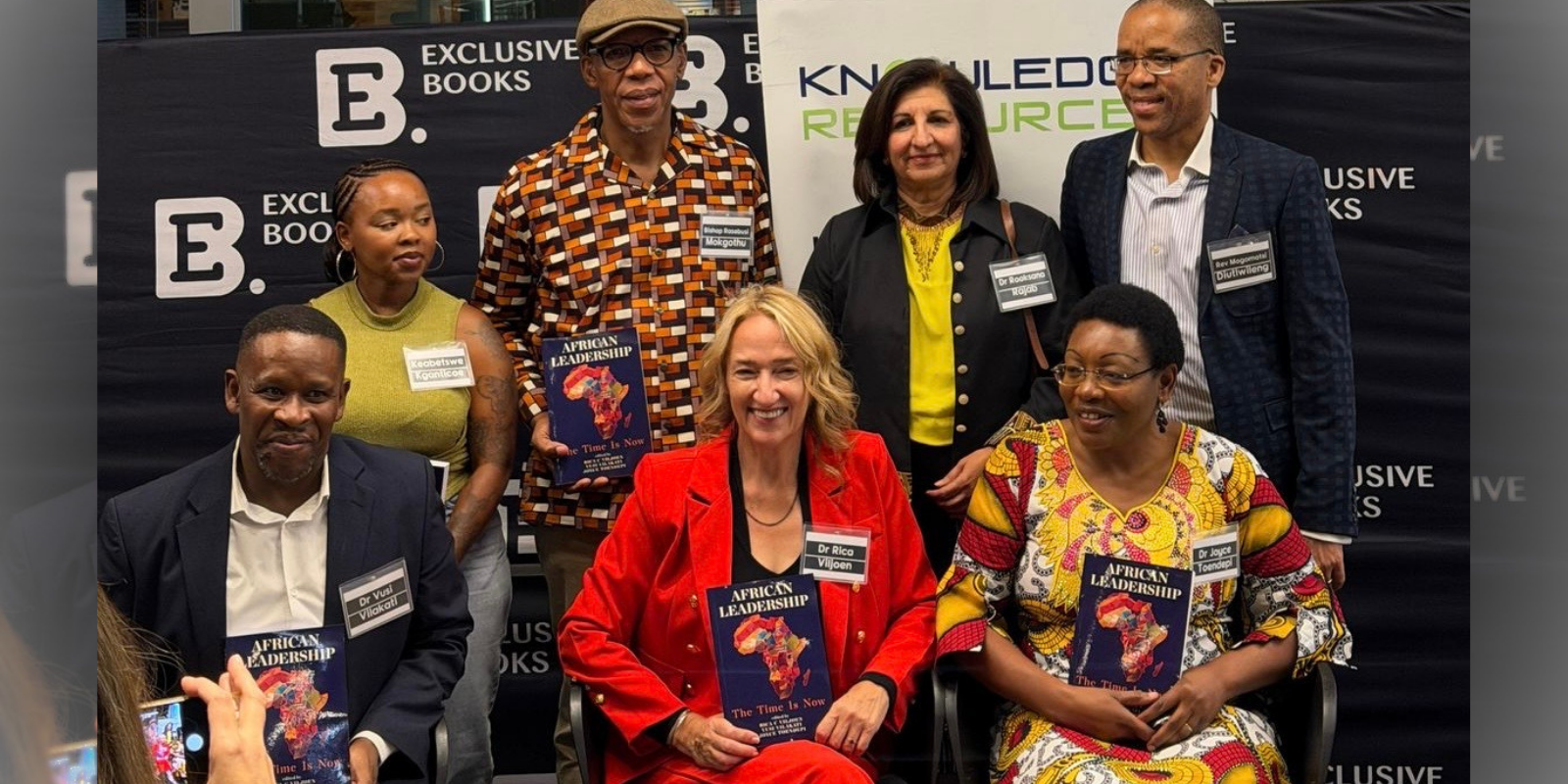
Just two weeks ago, 8 April 2026, marked a meaningful moment. The launch of African Leadership – The Time is Now brought together a collective of voices, perspectives, and experiences, each reflecting on what leadership means in the context of our continent today.
I am honoured to have been a contributor to this work. I thank the editors Dr Rica Viljoen, Dr Joyce Toendepi and Dr Vusi Vilakati for bringing it together so well. Not only because of the significance of the publication itself, but because of the conversations it represents – conversations about leadership, responsibility, and the kind of future we are shaping in a time of profound change.
I love the opening line:
“Africa stands at a defining crossroads. Amid global uncertainty, fractured systems, and shifting power dynamics, the continent is called not merely to respond, but to lead – on its own terms, from its own wisdom, and for the benefit of humanity as a whole”
For me, this moment has been less about the event, and more about reflection. Reflection on the journey that has shaped my work over time – across learning, governance, organisational development, and leadership. And the questions that continue to sit at the centre of it:
- How do we lead in complexity?
- How do we design systems that are not only efficient, but fair and trusted?
- How do we embrace technological advancement without losing our humanity?
These are not abstract questions. They are lived realities in the organisations and systems we are part of everyday, and they have shaped both my contribution to this book and the broader body of work I continue to develop.
Over time, this has led me to a central idea that anchors my thinking: That transformation is not simply about what we build, but about how well the different parts of our systems align. Between ecosystem, organisation, and leadership. Between intention, design, and lived experience.
This is what I have come to understand as Resonance.
In my chapter, “Resonant Intelligence and the Evolving Ways of Learning and Working in a Digital Age”, I explore this idea further through four interconnected anchors:
- Agency and empathetic empowerment in how individuals engage with learning and work
- Continuous learning and adaptability
- Human-centred leadership in a technology-driven environment with ethical foresight and accountability
- Resilience through reflection and relationships
Together, these form the basis of a more integrated and human-centred approach to digital transformation.
I’ve explored this thinking more fully in-book, which brings together the threads that have shaped my work and approach. As we move forward from this launch, I remain convinced of one thing:
The future of leadership will not be defined by certainty but by our ability to navigate complexity with clarity, integrity, and care. And to do so in a way that keeps people firmly at the centre.